Translate

Showing posts with label Disability. Show all posts

Tuesday, July 9, 2024

Disability Pride Moth July 24


 On July 26, 1990, President George Bush signed the Americans with Disabilities Act; the first of its kind worldwide. Through the ADA and the efforts of activists,  some of the barriers people with disabilities have faced have been removed, to allow for better integration into society.  This includes the creation of accessibility in public places and protection from discrimination in the workplace.   July is Disability Pride Month. The goal is to spread awareness and visibility and for people with disabilities to celebrate their pride for themselves.  According to the CDC, 1 in every 4 adults in the U.S. has a disability, making people with disabilities, the largest minority group in the U.S..

*Book descriptions featured are provided by the publishers*


In the summer of 2019, journalist Melissa Blake penned an op-ed for CNN Opinion. A conservative pundit caught wind of it, mentioning Blake's work in a YouTube video. What happened next is equal parts a searing view into society, how we collectively view and treat disabled people, and the making of an advocate. After a troll said that Blake should be banned from posting pictures of herself, she took to Twitter and defiantly posted three smiling selfies, all taken during a lovely vacation in the Big Apple.


"Please Do Not Touch This Exhibit explores disability, storytelling, and the process of mythologising trauma. Jen Campbell writes of Victorian circus and folklore, deep seas and dark forests, discussing her own relationship with hospitals -- both as a disabled person, and as an adult reflecting on childhood while going through IVF."--. Provided by publisher.


"From a longtime disability rights activist comes this moving window into the lives of people with disabilities and the lessons they can teach us .... Told through one hundred short, funny, harrowing, and thought-provoking stories, the book distills ten key lessons that reveal people with disabilities as authoritative sources on creativity, love, sexuality, dealing with adversity, and living a good life"--. Provided by publisher.


"When Jules Sherred discovered the Instant Pot multicooker, he was thrilled. And incensed. How had no one told him what a gamechanger this could be, for any home cook but in particular for those with disabilities and chronic illness? And so the experimenting--and the evangelizing--began. The kitchen is the most ableist room in the house. With 50 recipes that make use of three key tools--the electric pressure cooker, air fryer, and bread machine--Jules has set out to make the kitchen accessible and enjoyable. The book includes pantry prep, meal planning, shopping guides, kitchen organization plans, and tips for cooking safely when disabled, all taking into account varying physical abilities and energy levels. Organized from least to greatest effort (or from 1 to "all your spoons," for spoonies), beginning with spice blends and bases, Jules presents thorough, tested, inclusive recipes for making favourites like butter chicken, Jules's Effin' Good Chili, Thai winter squash soup, roast dinners, matzo balls, pho, samosas, borshch, shortbread, lemon pound cake, and many more. Jules also provides a step-by-step guide to safe canning and a template for prepping your freezer and pantry for post-surgery. With rich accompanying photography and food histories, complete nutritional information and methods developed specifically for the disabled and neurodivergent cook, Crip Up the Kitchen is at once inviting, comprehensive, and accessible. If you've craved the economy and satisfaction of cooking at home but been turned off by the ableist approach of most cookbooks--this one's for you!"--. Provided by publisher.


"A hilarious and poignant memoir grappling with family, disability, and coming of age in two closets--as a gay man and as a man living with cerebral palsy. Greg Marshall’s early years were pretty bizarre. Rewind the VHS tapes (this is the nineties) and you’ll see a lopsided teenager limping across a high school stage, or in a wheelchair after leg surgeries, pondering why he’s crushing on half of the Utah Jazz. Add to this home video footage a mom clacking away at her newspaper column between chemos, a dad with ALS, and a cast of foulmouthed siblings. Fast forward the tape and you’ll find Marshall happily settled into his life as a gay man only to discover he’s been living in another closet his whole life: He has cerebral palsy, a diagnosis that has been kept from him since birth. (His parents always told him he just had "tight tendons" and left it at that.) Here, in the hot mess of it all, lies Greg Marshall’s wellspring of wit and wisdom. Leg is an extraordinarily funny and insightful memoir from a daring new voice. Packed with outrageous stories of a singular childhood, it is also a startlingly original examination of what it means to transform when there are parts of yourself you can’t change, a moving portrait of a family in crisis, and a tale of resilience of spirit. In Marshall’s deft hands, we see a story both personal and universal--of being young and wanting the world, even when the world doesn’t feel like yours to want."--Amazon.com.


An anthology of stories in various genres, each featuring disabled characters and written by disabled creators. The collection includes stories of interstellar war, a journey to Persia, a dating debacle. The teenaged characters reflect diverse colors, genders, and orientations-- without obscuring the realities of their disabilities. -- adapted from jacket


"A groundbreaking collection of first-person writing on the joys and challenges of the modern disability experience: Disability Visibility brings together the voices of activists, authors, lawyers, politicians, artists, and everyday people whose daily lives are, in the words of playwright Neil Marcus, "an art . . . an ingenious way to live." According to the last census, one in five people in the United States lives with a disability. Some are visible, some are hidden--but all are underrepresented in media and popular culture. Now, just in time for the thirtieth anniversary of the Americans with Disabilities Act, activist Alice Wong brings together an urgent, galvanizing collection of personal essays by contemporary disabled writers. There is Harriet McBryde Johnson's "Unspeakable Conversations," which describes her famous debate with Princeton philosopher Peter Singer over her own personhood. There is columnist s. e. smith's celebratory review of a work of theater by disabled performers. There are original pieces by up-and-coming authors like Keah Brown and Haben Girma. There are blog posts, manifestos, eulogies, and testimonies to Congress. Taken together, this anthology gives a glimpse of the vast richness and complexity of the disabled experience, highlighting the passions, talents, and everyday lives of this community. It invites readers to question their own assumptions and understandings. It celebrates and documents disability culture in the now. It looks to the future and past with hope and love"-- Provided by publisher.


Haben grew up spending summers with her family in the enchanting Eritrean city of Asmara. There, she discovered courage as she faced off against a bull she couldn't see, and found in herself an abiding strength as she absorbed her parents' harrowing experiences during Eritrea's thirty-year war with Ethiopia. Their refugee story inspired her to embark on a quest for knowledge, traveling the world in search of the secret to belonging. She explored numerous fascinating places, including Mali, where she helped build a school under the scorching Saharan sun. Her many adventures over the years range from the hair-raising to the hilarious.

Haben defines disability as an opportunity for innovation. She learned non-visual techniques for everything from dancing salsa to handling an electric saw. She developed a text-to-braille communication system that created an exciting new way to connect with people. Haben pioneered her way through obstacles, graduated from Harvard Law, and now uses her talents to advocate for people with disabilities.

Haben takes readers through a thrilling game of blind hide-and-seek in Louisiana, a treacherous climb up an iceberg in Alaska, and a magical moment with President Obama at The White House. Warm, funny, thoughtful, and uplifting, this captivating memoir is a testament to one woman's determination to find the keys to connection.


"From disability advocate with a PhD in disability studies and creative nonfiction, and creator of the Instagram account @ sitting pretty, an essay collection based on a lifetime of experiences in a paralyzed body, tackling themes of identity, accessibility, bodies, and representation"-- Provided by publisher.


After moving to Colorado, deaf seventeen-year-old Maya is forced to attend a hearing school, where she must navigate a new life and prove that her lack of hearing will not stop her from pursuing her dreams. Includes an interview with the author.

Monday, September 13, 2021

Disease and Disability Literacy


"I knew growing up, that my life as a disabled child was just a valuable as that of any other girl. But I did not know- and sometimes still don't- how to fit physically into that valuable space. I was not the girl who was graceful in dance class, even though I wanted to be; I was not the girl who walked confidently through the halls at school I limped, I wore awkward boxy shoes. The princesses in the talks I read in school and at home were not hampered by orthopedic interest or physical therapy. They didn't have to go on yearly checkups to a hospital in Toronto so a doctor could examine their misshapen feet and measure their limbs"

I could relate to Amanda Leduc's Disfigured: on Fairy Tales, Disability, and Making Space in a way that is very rare for me. Having had several skin grafts on my left foot, to remove a birthmark, all by the time I entered 4th grade, I never had anyone who truly understood what I went through, what I felt. I barely understood any of it.

"Books are sometimes windows, offering views of worlds that may be real or imagined, familiar or strange. These windows are also sliding glass doors, and readers have only to walk through in imagination to become part of whatever world has been created or recreated by the author. When lighting conditions are just right, however, a window can also be a mirror. Literature transforms human experience and reflects it back to us, and in that reflection, we can see our own lives and experiences as part of the larger human experience. Reading, then, becomes a means of self-affirmation, and readers often seek their mirrors in books."

—Rudine Sims Bishop, "Mirrors, Windows, and Sliding Glass Doors" from Perspectives: Choosing and Using Books for the Classroom. vol. 6, no. 3. Summer 1990 https://litreactor.com/columns/representation-matters

The goal for disease literacy month is to bring people a better understanding of their own disease and chronic illness; especially children. Not being able to grasp the who, what, when, where, why, and how only adds to the confusion and frustration of being sick.

Now for clarification:

An illness is a sickness. Some illnesses are acute, which means they come on quickly and are over quickly (like a cold or the flu). Other illnesses are chronic, which means they last a long time and perhaps a lifetime (like asthma or diabetes).

A disability is a physical or mental problem that makes it harder to do normal daily activities. You can be born with a disability or get it from an illness or an injury.


For this blog, I am including disability with disease literacy because the representation for both sides of this is lacking.

In April, Margaret Kingsbury tackled this topic in The Current State Of Disability Representation In Children's Books on Bookriot. Tackling how, with improvements when it comes to diversity and disability representation, there is still a huge hole: "According to the Cooperative Children’s Book Center’s 2019 study, only 3.4% of children’s books have disabled main characters. Compare this statistic with the CDC’s finding that 26% of Americans have disabilities, and it’s easy to see there’s a problem."

Some books are problematic in their reinforcement of stereotypes or the portrayal of someone "overcoming" their disability in ways that just aren't possible. Disability in Kidlit tackles problematic portrayals in Discussion: If We Could Tell an Author One Thing … where there is a call for accuracy because spectrums exist, and disabilities shouldn't be painted with the same brush. Take Multiple Sclerosis, it's considered a "snowflake" disease because it affects people differently.

Kids need to see themselves in the books that they read, the television and movies they watch, and in the toys, they play with. An accurate portrayal of just a person being human. Not as someone's inspiration, not as a villain, and not as a cliche (all of which are problematic themes that the disabled community faces). "In addition to providing readers with accurate and realistic information regarding a disability, literature should also promote empathy and acceptance" Literature opens doors for all children, Donna L. Miller

I begged for a stuffed bunny with a grease stain on his forehead. My mom asked "why? why do you want a toy with a stain." My answer: "he's got a birthmark, like me!"

In the introduction of her book Sitting Pretty: The View from my Ordinary Resilient Disabled Body Rebekah Taussig writes: "When you grow up in a world that doesn't see you or welcome you or include you or represent you, you believe the world isn't for you..."


"A factual, yet hopeful story about the 2020 global COVID-19 pandemic. This book assures children that many people, including kids themselves, are helping to fight this new disease."--Page [4] of cover.


After being diagnosed with rare eye cancer, twelve-year-old Ross discovers how music, art, and true friends can push him through treatment and survive middle school.


Harry loves macaroni and cheese, but when he gets sick, he can't eat it! He gets so sick that his parents take him to the hospital. The story then follows Harry (with his mom and dad) through the experience of going to the hospital. Harry doesn't like having to meet lots of new people, getting poked with needles, and staying the night in a strange place, all the while feeling sick to his tummy. But with his parents' comfort and the help of lots of doctors, nurses, and other people, Harry learns that the hospital doesn't have to be a big, scary place.


"Harry Goes to the Hospital is the resource parents are looking for. Dr. Bennett captures all the questions and fears children may have about impending or unexpected hospital visits and addresses them in an engaging and informative way! This book encourages children to explore their feelings and express their thoughts. I highly recommend it!"
—Terry Spearman, CCLS, Team Leader, Child Life Services, Children's National Medical Center


Harriet Flores struggles with boredom and an unrequited crush while learning to manage her chronic illness through a long, hot, 1990s summer in Chicago. She uses her imagination to cope, which sometimes gets her into trouble, as she makes up fantastical fibs and wonders if there are ghosts upstairs. One neighbor, Pearl, encourages Harriet to read and write, leading Harriet to have a breakthrough


Illustrations and easy-to-read, rhyming text convey advice about what to do when a friend becomes very sick.


This novel-in-verse--at once literary and emotionally gripping--follows the unfolding friendship between two very different teenage girls who share a hospital room and an illness.

Chess, the narrator, is sick, but with what exactly, she isn't sure. And to make matters worse, she must share a hospital room with Shannon, her polar opposite. Where Chess is polite, Shannon is rude. Where Chess tolerates pain silently, Shannon screams bloody murder. Where Chess seems to be getting slowly better, Shannon seems to be getting worse. How these teenagers become friends, helping each other come to terms with their illness, makes for a dramatic and deeply moving read


A diagnosis of chronic Lyme disease during her sophomore year at Stanford sends Priya back to her loving but overbearing family in New Jersey. Will she ever be able to go back to premed? Thankfully she has her online pen pal, Brigid, and the "oof ouch my bones" virtual support group that meets on Discord to crack jokes and vent about their own chronic illnesses. When Brigid suddenly goes offline, Priya drives to Pennsylvania to check on Brigid. She finds a horrifying creature shut in the basement, and begins to puzzle together an impossible but obvious truth: the creature might be a werewolf-- and the werewolf might be Brigid. -- adapted from jacket. Provided by Publisher.


"Written by Boston Marathon bombing survivors Jessica Kensky & Patrick Downes, Rescue & Jessica is based on their real-life experience with Jessica’s service dog Rescue." -https://scottmagoon.com/rescue-jessica


When he is paired with a girl who has lost her legs, Rescue worries that he isn't up to the task of being her service dog.


For Bixby Alexander Tam (nicknamed Bat), life tends to be full of surprises -- some of them good, some not so good. Today, though, is a good surprise day. Bat's mom, a veterinarian, has brought home a baby skunk, which she needs to take care of until she can hand him over to a wild-animal shelter. But the minute Bat meets the kit, he knows they belong together. And he's got one month to show his mom that a baby skunk might just make a pretty terrific pet.


The author recounts in graphic novel format her experiences with hearing loss at a young age, including using a bulky hearing aid, learning how to lip read, and determining her "superpower."
"Going to school and making new friends can be tough. But going to school and making new friends while wearing a bulky hearing aid strapped to your chest? That requires superpowers! In this funny, poignant graphic novel memoir, author/illustrator Cece Bell chronicles her hearing loss at a young age and her subsequent experiences with the Phonic Ear, a very powerful--and very awkward--hearing aid. The Phonic Ear gives Cece the ability to hear--sometimes things she shouldn't--but also isolates her from her classmates. She really just wants to fit in and find a true friend, someone who appreciates her as she is. After some trouble, she is finally able to harness the power of the Phonic Ear and become "El Deafo, Listener for All." And more importantly, declare a place for herself in the world and find the friend she's longed for"-- from publisher's web site.


An anthology of stories in various genres, each featuring disabled characters and written by disabled creators. The collection includes stories of interstellar war, a journey to Persia, a dating debacle. The teenaged characters reflect diverse colors, genders, and orientations-- without obscuring the realities of their disabilities. -- adapted from jacket


"Six dangerous outcasts. One impossible heist. Kaz's crew is the only thing that might stand between the world and destruction--if they don't kill each other first"-- Provided by the publisher.

"I was impressed by all the representations of disability in the book. Even the ones with little page time receive respect and realism, and every disability organically feeds into the characters’ goals, backstories, and characterization. It’s common for disabilities to feel like the primary point of the character, or on the opposite end to feel tacked-on and irrelevant. The disabled characters in Six of Crows are all complex in their own rights, and it’s impossible to imagine them without their disabilities – they would be entirely different people." -Review: Six of Crows by Leigh Bardugo BY NATASHA RAZI


“This may feel true for every era, but I believe I am living in a time where disabled people are more visible than ever before. And yet while representation is exciting and important, it is not enough. I want and expect more. We all should expect more. We all deserve more.”


Links:


Monday, March 1, 2021

MS Awareness Month


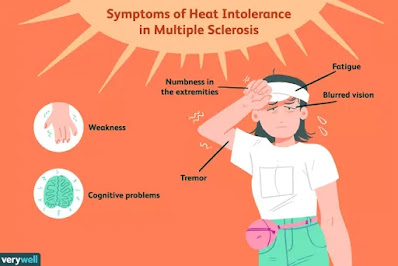
March is Multiple Sclerosis Awareness Month. This one is near and dear to me, as I was diagnosed with MS in April of 2016. MS is an autoimmune disease that attacks your Central Nervous System. Basically, my immune system is in hyperdrive and it wants to attack everything, including the healthy myelin sheaths that cover my nerves. I short-circuit. The amazing thing about this is that having an immune system that works extra hard, in no way keeps me from getting sick; if I get a cold it will become a sinus infection. To combat more progressive forms of MS, are medications that try to put your immune system in check. I'll be starting one of these meds, Ocrevus on March 16th, I'm told that this infusion will be an all-day affair. To prepare for this I have spent the last couple of months getting various vaccines, (still waiting for the Covid Vaccination). MS is a game-changer, I've had to make a lot of adjustments and will continue to do so. There is pain, heat intolerance, fatigue, cognitive difficulties, balance issues, and reoccurring bouts of Optic Neuritis which has caused a good deal of damage to my right eye. This list though, that's personal to me. MS is called a "Snowflake Disease" it affects everyone differently; different combinations of symptoms affect people in various degrees. According to the National MS Society, there are 2.3 million people worldwide that have been diagnosed with MS and to be honest, it sucks.


Being diagnosed with multiple sclerosis (MS) doesn′t mean your life is over. Everyone′s MS is different and no one can predict exactly what yours will be like. The fact is, lots of people live their lives with MS without making a full-time job of it.


For decades, this trusted handbook has helped those with MS and their families and friends to treat and understand their disease. Research brings us closer to a cure every day, but until that day comes, patients have, in this book, the very best tool for beating MS--the facts.


According to the National Multiple Sclerosis Society, 15% of MS patients are diagnosed with the progressive form of the disease and experience symptoms such as tremors, poor coordination, difficulty walking, and other problems from the start. While an additional 50%, of those diagnosed with relapsing-remitting MS, will develop progressive MS ......


A diagnosis of MS can feel overwhelming, even terrifying. Though over 400,000 American's have received that diagnosis, succinct answers on the issues surrounding MS can be hard to come by. This guide is the definitive resource for those who need information on this debilitating disease. Organized in an accessible question-and-answer format, it includes information on diagnosis, epidemiology, and the condition's emotional, social, and economic aspects, as well as descriptions of common medications and helpful advice for managing symptoms.


Scholarly and wide-ranging, this new, extensively illustrated book provides a historical survey and social history of multiple sclerosis and is rich in sources and detail.


"A safe, comprehensive, and easy-to-use guide to using cannabis--including CBD and THC--to ease chronic and acute health issues such as pain, insomnia, inflammation, depression, anxiety, grief, stress, and more, from the founder of a global cannabis wellness network and an osteopathic physician"-- Provided by publisher.


Mental Sharpening Stones: Manage the Cognitive Challenges of Multiple Sclerosis provides real-life techniques garnered from MS patients and their medical providers, sharing their practical methods for pushing back against the disruptive and potentially disabling cognitive symptoms that affect MS patients. The book offers strategies that will assist those living with MS to retain their intellectual faculties through sharpening their mental discipline.


I love this book. My copy is well-worn and highlighted.


"MS and Your Feelings" is the first book to specifically address the emotional pain caused by the unpredictable, disabling chronic inflammatory condition multiple sclerosis. Psychotherapist and MS patient Allison Shadday offers readers effective strategies for dealing with the psychological trauma of this disease. Shadday shares real-life MS success stories and gives insightful professional advice derived from years of counseling hundreds of chronically ill patients. Her book offers readers hope, inspiration, and validation, teaching them how to come to terms with an MS diagnosis; strategies for identifying and managing stress triggers; ways to cope with fear, guilt, anger, loss, depression, and isolation; steps to enhance intimacy and develop a greater sense of emotional security; and more. Patient success stories illustrate the techniques described. Renowned neurologist and MS expert Dr. Stanley Cohan contributes discussions of the importance of treating MS's emotional symptoms, the latest medical thinking, and the promising future of drug research for this challenging condition.


Millions of people are challenged by problems with chewing and swallowing, especially those who are elderly and those who have Parkinson's disease, multiple sclerosis, AIDS, or head and/or neck cancers. This book offers helpful tips and techniques as well as recipes to help make eating and swallowing easier and more satisfying.


This comprehensive, user-friendly guide shows how to apply Yogic principles to the management of multiple sclerosis. Written by a medical doctor and a Yoga teacher who has MS, the book includes photographs and descriptions of each pose; explains effects, advantages, and contraindications; and contains "starter poses" for the novice or the physically challenged.


Because Multiple Sclerosis is a disease that someone will live with for years, or even decades, it is important for family and friends to understand what the person is going through and learn how to give support. Multiple Sclerosis used to be feared because it was so unpredictable and doctors knew very little about how to treat it. Thanks to good research and great doctors, people can live with MS even though there is not a cure yet. The Electrifying Story of Multiple Sclerosis is written to help people understand what it feels like to have the disease, how to help, and what symptoms people feel.


Memoir


"Keiler Roberts mines the passing moments of family life to deliver an affecting and funny account of what it means to simultaneously exist as a mother, daughter, wife, and artist. Drawn in an unassuming yet charming staccato that mimics the awkward rhythm of life, no one's foibles are left unspared, most often the author's own....Roberts can get lost in the rewarding melodrama of playing barbies with her daughter and will momentarily snap out of her depression. Her harmless fibs to get through the moment are brought up by her daughter a year or two later, yet without hesitation Roberts will request that her daughter's imaginary friend not visit when she is around. Her MS diagnosis lingers in the background, never taking center stage."--. Provided by publisher.


A New York Times Bestselling AuthorOffering reflections on her early life, her marriage, and her diagnosis and recovery, the sources of her faith, and the stories of others who overcame adversity and inspired her to keep going, Ann Romney has created a brave and deeply honest portrait of a family facing an unexpected blow, often in the most public of circumstances.


Autobiographical at its roots, reportorial, and expansive, Blindsided explores the effects of illness on raising three children and on his relationship with his wife, Meredith Vieira (host of ABC's The View and the syndicated Who Wants To Be A Millionaire). Cohen tackles the nature of denial and resilience, the ins and outs of the struggle for emotional health, and the redemptive effects of a loving family. And while he may not have chosen to live with illness, illness did choose him. Written with grace, humor, and lyrical prose, Blindsided presents a life brimming over with accomplishment and joy in adversity.


Fiction


Spotswood’s stellar debut puts a modern spin on classic hard-boiled fiction with a duo of female private investigators. In 1945 Manhattan, Lillian Pentecost, “the most famous woman detective in the city and possibly the country,” struggles with multiple sclerosis. Fortunately, Lillian can always rely on her sharp-witted assistant, Willowjean Parker. Lillian hired her three years earlier after Will, a runaway whose five years performing with a traveling circus gave her a unique skill set, used her knife training to save Lillian’s life from a gunman. Their latest case involves a wealthy woman who was bludgeoned to death with a crystal ball in a locked room during a party. It becomes personal when Lillian realizes that an old adversary, a fake medium and spiritual adviser, is entangled in the murder. Complications arise after Will becomes romantically entangled with the victim’s beautiful daughter. The deep and sensitive characterization of the two protagonists, coupled with rich description and tonally spot-on humor, make this a novel to remember. Spotswood is definitely a writer to watch. Agent: Darley Anderson, Darley Anderson Literary. (Oct.)
Publishers Weekly


Eighteen-year-old Muslims Adam and Zayneb meet in Doha, Qatar, during spring break and fall in love as both struggle to find a way to live their own truths.


As romance blossoms between her and Eli Fischer, Amelia Beiler is diagnosed with multiple sclerosis and faces a hard choice, since she will be shunned by her Amish community if she gets the treatment she wants.


After discovering her father has Multiple Sclerosis, Payton Gritas's life crumbles. Aiming to save Payton from denial the school counselor gets Payton to write Focus Exercises. But all Payton can see is the over-sized head of the boy who sits in front of her, Sean Griswold. Why does it suddenly seem so, um, gorgeous?!


Harriet Flores struggles with boredom and an unrequited crush while learning to manage her chronic illness through a long, hot, 1990s summer in Chicago. She uses her imagination to cope, which sometimes gets her into trouble, as she makes up fantastical fibs and wonders if there are ghosts upstairs. One neighbor, Pearl, encourages Harriet to read and write, leading Harriet to have a breakthrough and discover the power of storytelling.


Other Sources


November 2026

November is a month full of celebrations; not just Veterans Day and Thanksgiving. It is Native American Heritage Month and Men's Health ...