Translate

Showing posts with label U.S. History. Show all posts

Monday, December 6, 2021

Illinois Day


In Fourth Grade, one of my assignments was to draw the Illinois flag. I have this recollection of realizing one, that my art skills were seriously lacking and two, the Illinois flag has a lot going on. This is the only time that I can recall Illinois being a specific topic in school. Aside from the flag project, I recall learning about Abe Lincoln, Springfield, and maybe about cardinals being the state bird.


On December 03, 1818, Illinois became the 21st state. National Illinois Day, however, is not until December 7th. The "Prarie State", also known as "The Land of Lincoln" is home to 12.67 million (as of 2019), as well as "58 mammal species, 383 different resident and migrant birds, 104 types of reptiles and amphibians, 174 species of fish, and some 27,000 types of insects, mussels, and other invertebrates." https://ilenviro.org/wildlife-and-habitat/


"Exploring the Land of Lincoln invites road-trippers and history buffs to explore the Prairie State's most extraordinary historic sites. Charles Titus blends storytelling with in-depth research to highlight twenty must-see destinations selected for human drama, historical and cultural relevance, and their far-reaching impact on the state and nation. Supplementary maps, illustrations, mileage tables, and other information encourage readers to create personal journeys of exploration to, and beyond, places like Cahokia, the Lincoln sites, Nauvoo, and Chicago's South Side Community Art Center"-- Provided by publisher.


Dig up the men who tried to dig up Lincoln. Mull over the Mad Gasser of Mattoon and the 1977 thunderbird infestation, from a safe distance. Watch in horror as one of the greatest maritime disasters in U.S. history occurs twenty feet from the banks of the Chicago River or follow the course of the blimp crash that convinced a downtown bank employee that it was raining hell. Try not to blink as towns washed away by floods and shrines covered over by condominiums are dragged back from the margins of history into the center of the page, where they belong. After all, reasons author Bryan Alaspa, if the pope was eager to stop by the House of Crosses during his visit to Chicago, surely it is worth a look. Just beware: a quick glance into this book and you might not look up until you've read the whole gripping and grin-inspiring collection.


Discover the breathtaking beauty and unforgettable adventures that await in Illinois state parks. Lee Mandrell and DeeDee Niederhouse-Mandrell highlight the incredible diversity and natural beauty of the landscapes, flora, and fauna of the state.

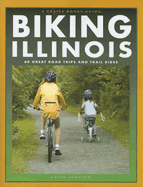


A renaissance in Illinois history scholarship has sparked renewed interest in the Prairie State's storied past. Students, meanwhile, continue to pursue coursework in Illinois history to fulfill degree requirements and for their own edification. This Common Threads collection offers important articles from the Journal of the Illinois State Historical Society. Organized as an approachable survey of state history, the book offers chapters that cover the colonial era, early statehood, the Civil War years, the Gilded Age and Progressive eras, World War II, and postwar Illinois. The essays reflect the wide range of experiences lived by Illinoisans engaging in causes like temperance and women's struggle for a shorter workday; facing challenges that range from the rise of street gangs to Decatur's urban decli≠ and navigating historic issues like the 1822-24 constitutional crisis and the Alton School Case. Contributors: Roger Biles, Lilia Fernandez, Paul Finkelman, Raymond E. Hauser, Reginald Horsman, Suellen Hoy, Judson Jeffries, Lionel Kimble Jr., Thomas E. Pegram, Shirley Portwood, Robert D. Sampson, Ronald E. Shaw, and Robert M. Sutton.


"The Discovering Vintage series takes you back in time to all of the timeless classic spots each city has to offer. The books spotlight the charming stories that tell you what each place is like now and how it got that way from classic restaurants to shops to other establishments that still thrive today and evoke the unique character of the city. They're all still around--but they won't be around forever. Start reading, and start your discovering now!,"--Amazon.com.


"In Corn Kings and One-Horse Thieves, James Krohe Jr. presents an engaging history of an often-overlooked region, filled with fascinating stories and surprising facts about Illinois's midsection. Krohe describes in lively prose the history of mid-Illinois from the Woodland period of prehistory up until roughly 1960, covering the settlement of the region by peoples of disparate races and religions; the exploitation by Euro-Americans of forest, fish, and waterfowl; the transformation of farming into a high-tech industry; and the founding and deaths of towns. The economic, cultural, and racial factors that led to antagonism and accommodation between various people of different backgrounds are explored, as are the roles of education and religion in this part of the state. The book examines remarkable Utopian experiments, social and moral reform movements, and innovations in transportation and food processing. It also offers fresh accounts of labor union warfare and social violence directed against Native Americans, immigrants, and African Americans and profiles three generations of political and government leaders, sometimes extraordinary and sometimes corrupt (the "one-horse thieves" of the title). A concluding chapter examines history's roles as product, recreation, and civic bond in today's mid-Illinois. A general history of mid-Illinois for the curious nonacademic reader, Corn Kings, and One-Horse Thieves draws on a wide range of sources to explore a surprisingly diverse region whose history is America in microcosm"-- Provided by publisher.


Here, naturalist Scott Shupe offers detailed information on all the wildlife that resides in the Prairie State. Included are over 800 color photographs, depicting the different species of mammals, reptiles, amphibians, birds, and fish, while also offering over 600 range maps to show their territory


Make identifying fish easy and enjoyable. This field guide by Dave Bosanko features detailed information about 86 types of Illinois fish, and the book's waterproof pages make it perfect for the dock or boat. Identify your catches with the intricately detailed fish illustrations, and verify them using the "Similar Species" comparison features. Then read fascinating facts on spawning behavior, feeding habits and more. Plus, match up your best catches against the state and North American records. With inside information for locating fishing hotspots, this book is essential for every tackle box, beach bag, RV and cabin.


"This book tells the history of Kaskaskia, Illinois, from its founding to its time as the territorial capital and then the first state capital, through its disasters--earthquakes, tornadoes, floods, and epidemics--and finally to its disappearance when the Mississippi River washed it away"-- Provided by publisher.


DVDs:


Links:


Monday, March 15, 2021

Irish American History Month


In 1991 Irish-American History month came to be. Irish-American history is filled with stories of discrimination, anti--Catholic prejudice, and perseverance. In 2019, 30.4 million people in America claimed Irish ancestors. Between 1820 and 1930 as many as 4.5 million immigrants from Ireland found their way to America and with them came many important contributions to American culture. Unions, the abolishment of child labor, and improved working conditions are just a few of those contributions.


1001 Things Everyone Should Know About Irish American History is a comprehensive and vividly illustrated celebration of Irish enterprise, talent, and courage. Organized around such broad subjects as culture, politics, business, religion, and sports, it engagingly profiles the Irish American presidents and Congressional Medal of Honor recipients and highlights the ten most important works of Irish American fiction, while offering many surprises. Alongside the exploits of Irish American soldiers like General Philip Sheridan, O’Donnell tells the incredible story of Jennie Hodgers, a Belfast-born woman who served in the Union Army disguised as a man. Elsewhere Bing Crosby shares the stage with Willis O’Brien, the brilliant pioneer of film animation and the man who brought Nat King Cole to life. Entrepreneur Henry Ford is featured with Rose O’Neill, inventor of the wildly popular Kewpie Doll. And throughout readers will find answers to questions like who was the Murphy who dreamed up “Murphy’s Law?”; why is a do-over shot in golf called a “mulligan?”; what exactly does it mean to “scream like a banshee?”; and did Mrs. O’Leary’s cow really start the Great Chicago Fire of 1871? Written with the understanding that so much of the Irish experience in America is inseparable from the history of the Emerald Isle, 1001 Things also devotes substantial coverage to the history of Ireland.


"The authors look at the state's earliest Irish residents and communities and describe the critical roles played by Irish immigrants in the settlement and founding of the Prairie State"-- Provided by publisher.


A guide for everything Irish in Chicago, this book represents the heart and soul of Irish heritage and culture. Included is a list of Chicago pubs where true Irish musicians perform traditional Irish music and tips to impress the pub crowd, as well as other historical and cultural sites and events.


Corrigan's beautifully written memoir intertwines her own story with that of her larger-than-life, Irish-American, born-salesman fathers, and illustrates both an unbelievably powerful and healing father/daughter relationship and the unbreakable bonds of family.


"National Review senior writer Michael Brendan Dougherty delivers a mediation on belonging, fatherhood, and nationalism, through a series of letters to his estranged Irish father. The child of an Irish man and an Irish-American woman who split up soon after he was born, Michael Brendan Dougherty grew up with an acute sense of absence. He loved his mother but longed for his father, who only occasionally returned from Ireland for visits. He was happy enough in America, but desperately wanted the sense of cultural belonging that his Irish half-siblings seemed to enjoy. When his first child was born, Dougherty knew he wanted to give her that kind of solid connection to her heritage. Aware that he was becoming a cliché--the Irish-American who wants to be more Irish than the Irish--he began to study Gaelic. He buried himself in Irish history and learned old songs to sing to his daughter. Most significantly, he began writing letters to his father about what he remembered, what he missed, and what he longed for, realizing along the way that his longings were shared by many of his generation. These letters would become this book. Many Americans today, of all backgrounds, lack a clear sense of cultural heritage or even a vocabulary for expressing this lack. And as the national conversation about identity becomes increasingly polarized, people tend to avoid talking about their roots altogether. In these deeply felt and fascinating letters, Dougherty offers a new way for all of us to think about who we are, where we came from, and where we're going."--Provided by publisher.


"From the National Book Award-winning and best-selling author, Timothy Egan comes the epic story of one of the most fascinating and colorful Irishman in nineteenth-century America. The Irish-American story, with all its twists and triumphs, is told through the improbable life of one man. A dashing young orator during the Great Famine of the 1840s, in which a million of his Irish countrymen died, Thomas Francis Meagher led a failed uprising against British rule, for which he was banished to a Tasmanian prison colony. He escaped and six months later was heralded in the streets of New York--the revolutionary hero, back from the dead, at the dawn of the great Irish immigration to America. Meagher's rebirth in America included his leading the newly formed Irish Brigade from New York in many of the fiercest battles of the Civil War--Bull Run, Antietam, Fredericksburg. Twice shot from his horse while leading charges, left for dead in the Virginia mud, Meagher's dream was that Irish-American troops, seasoned by war, would return to Ireland and liberate their homeland from British rule. The hero's last chapter, as territorial governor of Montana, was a romantic quest for a true home in the far frontier. His death has long been a mystery to which Egan brings haunting, colorful new evidence"-- Provided by publisher.


In the diary account of her journey from Ireland in 1847 and of her work in a mill in Lowell, Massachusetts, fourteen-year-old Mary reveals a great longing for her family.


"Through the battles they fought, the novels they wrote, and the people they touched, these nine men and women fled unthinkable hardship; they not only became American but also helped make our nation what it is today. Inspiring, intimate, and timely, Nine Irish Lives serves as a reminder of America's shared values as we debate issues of immigration and compassion today" -- Back cover.


Although many Irish immigrated to America in the early 1800s, the Ireland potato famine of the 1840s and 50s resulted in more than a million immigrants escaping death and starvation to come to America. Unfortunately, the religious persecution and economic hardships that they experienced in Ireland continued in America. Affordable housing and good-paying jobs were hard to find, and large Irish communities developed in major cities like Boston, New York, and Chicago, relying on each other for support. Through hard work and determination, they overcame these obstacles and succeeded in becoming essential members of American society.


"Fiona and her family moved from Ireland to Chicago to begin a new life. Yet, when the family is struck with misfortune, will Fiona's lace help save them?"-- Provided by publisher.

Monday, March 8, 2021

Women's History Month


Women's History month has an added bonus this year with some historic firsts. Not only is Kamala Harris our first female Vice President but also the first African-American of South Asian descent to become Vice President. Our First Lady, is the first to hold the title of Doctor; Dr. Jill Biden is also the first First Lady who will continue to work outside of the White House by retaining her position at Northern Virginia Community College. 

Other firsts include:
New Mexico became the first state to elect a House delegation that is entirely made up of women of color, with Reps. Debra Halaand (D) and Yvette Herrell (R)—both Native American—and Latina Rep. Teresa Leger Fernandez (D). In January 2021, Rep. Halaand was tapped by President-elect Joe Biden to serve as secretary of the interior.
  • Stephanie Bice (R-OK) is the first Iranian American to serve in Congress and the first woman to serve as the Republican freshman class president in the House.
  • Cori Bush (D) is the first Black woman to represent Missouri in Congress.
  • Young Kim (R-CA), Michelle Steel (R-CA), and Marilyn Strickland (D-WA) are the first Korean American women to serve in Congress. Rep. Strickland is also the first Black person to represent Washington state in Congress.
  • Victoria Spartz (R-IN) is the first Ukrainian-born person to serve in Congress.


Daughter of an economist from Jamaica and a cancer researcher from India who met as civil rights activists at Berkeley, the U.S. Senator from California comes by her social justice concerns naturally. Here, she uses her life story to argue for a new way of treating our problems, describing the data-driven, community-based approach she took as the district attorney of San Francisco and subsequently chief law enforcement officer of the state.


This is the story of how Jill built a family of her own: from seeking small moments of joy, to balancing the family's needs with her personal and professional goals, to forming traditions that helped carry them through tragedy - all with the support of an extended family circle. That circle would morph over the years, but the one constant was love. And whether finding her own voice as Second Lady or changing lives as a teacher, whether nurturing the Biden clan or surviving devastating loss, Jill discovered her own strength and came to understand what it truly means to make a family.


A celebration of the pivotal but less-recognized roles women have played in culture and society reexamines history from a female perspective, from early matriarchal societies through the Suffragette movement and twentieth-century feminism.


Starting in the fifth century BCE and continuing to the present, Lee introduces readers to bold and inspiring women who dared to step outside traditional gender roles of their time.


"Looking through the ages and across the globe, [the authors] have reclaimed the stories of twenty-five remarkable women who dared to defy history and change the world around them. From Mongolian wrestlers to Chinese pirates, Native American ballerinas to Egyptian scientists, Japanese novelists to British Prime Ministers, [this book] will reframe the history that you thought you knew"--Provided by publisher.


A modern girl is nothing without her squad of besties, but Maggs takes readers on a tour of some of history's most famous female BFFs. You'll meet lady pirates, socialites, Olympic skiers and medical students who showed just how essential female friendship has been throughout history-- and throughout the world. -- adapted from jacket


Rad women worldwide: artists and athletes, pirates and punks, and other revolutionaries who shaped history / written by Kate Schatz; illustrated by Miriam Klein Stahl.


Covering 25 diverse women from early world leaders to modern-day heroes, What Would She Do? is an inspiring and empowering illustrated guide for today's budding young feminists.


Women hold up half the sky and, most days, do even more of the heavy lifting including childbearing and child-rearing. (All after a long day at the office.) Women have always been strong- true heroes, oftentimes unacknowledged. As we shake off the last traces of a major patriarchal hangover, women are coming into their own. In the 21st Century, all women can fully embrace their fiery fempower and celebrate their no-holds-barred individuality. From the foremothers who blazed trails and broke barriers, to today's women warriors from sports, science, cyberspace, city hall, the lecture hall, and the silver screen, The Book of Awesome Women paints 200 portraits of powerful and inspiring role models for women and girls poised for the future. The amazing women inside include Dian Fossey, Martina Navratilova, Sojourner Truth, Indira Gandhi, Aretha Franklin, Margaret Mead, Coretta Scott King, Georgia O'Keeffe, Jackie Joyner-Kersee, Joan Baez, Eleanor Roosevelt, Coco Chanel, Anita Hill, Nobel Peace Prize winner, Wangari Maathai, and many more. Now is the time to acknowledge the greatness of women!


Hillary Rodham Clinton and her daughter, Chelsea, share the stories of the gutsy women who have inspired them--women with the courage to stand up to the status quo, ask hard questions, and get the job done.


Explores the full scope of the movement to win the vote for women through portraits of its leaders and activists, including Lucretia Mott, Elizabeth Cady Stanton, Susan B. Anthony, and Sojourner Truth, Carrie Chapman Catt, Alice Paul, and Ida B. Wells-Barnett.


Profiles the lives of thirteen women who have left their mark on world history, including Caroline Herschel, Marie Curie, Mary Verghese, and Malala Yousafzai.


"Brief illustrated bios of women creators around the world"-- Provided by publisher.
Featuring the true stories of women creators and thinkers from around the world, throughout history, this book shows that sometimes seeing things a little differently can lead to big changes. Some names are well known, some are not, but all the women had a lasting effect on the fields they worked in. Whether they were breaking ground for innovative structures or breaking rules and creating new ones, the women profiled here not only made a place for themselves in the world but made the world a better place to live.


Thursday, November 12, 2020

Native American Heritage Month


Native American Heritage Month is a celebration of the cultures, traditions, and history, acknowledging the important contributions of American Indian and Alaskan Natives.

"Native American Heritage Month has evolved from its beginnings as a week-long celebration in 1986, when President Reagan proclaimed the week of November 23-30, 1986 as "American Indian Week." Every President since 1995 has issued annual proclamations designating the month of November as the time to celebrate the culture, accomplishments, and contributions of people who were the first inhabitants of the United States." -http://www.pbs.org/specials/native-american-heritage-month/


SOURCES:


The largest by far of the fifty states, Alaska is also the state of greatest mystery and diversity. And, as Claus-M. Naske and Herman E. Slotnick show in this comprehensive survey, the history of Alaska's peoples and the development of its economy have matched the diversity of its land- and seascapes. Alaska: A History begins by examining the region's geography and the Native peoples who inhabited it for thousands of years before the first Europeans arrived.


Fifth Sun offers a comprehensive history of the Aztecs, spanning the period before conquest to a century after the conquest, based on rarely-used Nahuatl-language sources written by the indigenous people.


"A "raw and honest" (Los Angeles Review of Books) memoir from the first Native American Poet Laureate of the United States. In this transcendent memoir, grounded in tribal myth and ancestry, music, and poetry, Joy Harjo details her journey to become a poet. Born in Oklahoma, the end place of the Trail of Tears, Harjo grew up learning to dodge an abusive stepfather by finding shelter in her imagination, a deep spiritual life, and a connection with the natural world. Narrating the complexities of betrayal and love, Crazy Brave is a haunting, visionary memoir about family and the breaking apart necessary in finding a voice." -- Publisher's description


The author of astute, heartfelt fiction, including the multi-best-booked The Translation of Dr Apelles, Ojibwe author Treuer uses his anthropological training to offer a new view of the Native experience. Treuer argues that the adversity Natives have faced since the late 1800s has in fact led to a rebirth of culture and identity, firming up resistance and connecting different peoples across the continent.


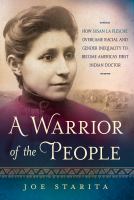
"An important and riveting story of a 19th-century feminist and change agent. Starita successfully balances the many facts with vivid narrative passages that put the reader inside the very thoughts and emotions of La Flesche." --Chicago Tribune

On March 14, 1889, Susan La Flesche Picotte received her medical degree--becoming the first Native American doctor in U.S. history. She earned her degree thirty-one years before women could vote and thirty-five years before Indians could become citizens in their own country.


Seeking to capture the romance and traditions of American Indian life and lore, photographer Ben Marra presents a series of portraits of men, women, and children who embody the proud spirit and intensity of the powwow - multi-tribal celebrations of native song and dance held throughout the USA.


A groundbreaking collection of stories, essays, poems, and speeches by a Sioux writer, teacher, and activist includes legends and tales from oral tradition, childhood stories, and allegorical fiction.


Dee Brown's eloquent, meticulously documented account of the systematic destruction of the American Indian became a publishing phenomenon when first published in 1970. Now in paperback, this stunningly illustrated edition showcases more than 300 images, including maps, drawings, paintings, portraits, and photographs of notable sites and sacred battlefields. Excerpts from such acclaimed books as Where White Men Fear to Tread, along with essays by notable historians and Native American leaders like Joseph Marshall III, enhance the original text.


Since the time of Columbus, Indian slavery was illegal in much of the American continent. Yet Reséndez shows it was practiced for centuries as an open secret: there was no abolitionist movement to protect the tens of thousands of natives who were kidnapped and enslaved by the conquistadors, forced to work in the silver mines, or made to serve as domestics for Mormon settlers and rich Anglos. New evidence sheds light too on Indian enslavement of other Indians as Reséndez reveals nothing less than a key missing piece of American history.


In the early 1800s, white Americans sought out more lands. The 1830 Indian Removal Act allowed the US government to trade lands with Native Americans. But officials often forcibly removed Native peoples from their homelands. The Indian Removal Act and the Trail of Tears describe this period of forced removal and its lasting effects. Easy-to-read text, vivid images, and helpful back matter give readers a clear look at this subject. Features include a table of contents, infographics, a glossary, additional resources, and an index. Aligned to Common Core Standards and correlated to state standards. Core Library is an imprint of Abdo Publishing, a division of ABDO.


September 2026

September is Read a New Book Month! To take part, you don't have to only read newly released books. It's about reading something new...